
Climbing Kilimanjaro is one of those trips that feels simple on paper… right up until you remember it’s 5,895 metres high and you’re days away from the nearest “normal” hospital.
That’s why standard travel insurance often isn’t enough. Most basic policies cap hiking/trekking around 3,000m and quietly exclude the exact thing you’re flying to Tanzania to do.
On this page, I’ll show you exactly what to look for, what to avoid, and I’ll compare 7 Kilimanjaro-friendly insurance providers so you can choose what fits your trip (and your budget).
In a rush? I recommend Rise & Shield's Kilimanjaro travel insurance.
My Quick Takeaways
If you only read one section, make it this:
- I always look for trekking cover to at least 6,000m (Kili is 5,895m).
- I want emergency medical + evacuation that doesn’t get weird about “remote trekking”.
- If a policy says “hiking covered” but doesn’t clearly mention altitude levels, I assume it’s not enough.
- I avoid anything that feels like it’ll turn into a debate above 4,600m.
- I buy early for cancellation protection (flights + trek deposits can be painful).
- If my route includes anything technical, I check how the insurer classifies it (trekking vs mountaineering).
Quick Kilimanjaro Trek Insurance Answers
Q: Do I need travel insurance for Kilimanjaro?
A: You really want insurance that explicitly covers high-altitude trekking up to at least 6,000m and emergency evacuation.
Q: What altitude does my policy need to cover?
A: At least 6,000m (Kili is 5,895m, the buffer matters).
Q: Is Kilimanjaro hiking or mountaineering?
A: Most routes are hiking trails, but anything technical (ropes/“mountaineering-style” sections) needs extra care and may need a different activity classification.
Q: Does insurance cover altitude sickness?
A: Often yes as a medical emergency, but only if your policy covers the trek/activity and you follow the insurer’s rules (e.g., pre-existing conditions, declared health issues, and sensible behaviour).
Q: Does “helicopter rescue included” mean I automatically get a helicopter?
A: No, it usually means the cost may be covered if it’s medically necessary and authorised by the insurer’s emergency assistance team.
Q: What’s the biggest mistake people make?
A: Buying “normal” travel insurance that caps trekking at 3,000–4,000m, then assuming Kilimanjaro is included anyway.
Q: When should I buy my insurance?
A: As soon as you pay deposits (so cancellation cover can actually help you if something happens before you fly).
Q: If I’m doing safari or Zanzibar after Kili, do I need different cover?
A: Usually, you just need one policy that covers your full itinerary + activities. But Zanzibar and safaris have their own inbound insurance rules, so double-check those too.7 Kilimanjaro Travel Insurance Providers (Compared)
I’m not an insurance expert, but I have been on the mountain a few times and know what to look for. It is ultimately your responsibility to decide if the policy provided by these Kilimanjaro travel insurance companies is right for you.
Important note: Policies change and vary by residency, age, and add-ons. I’m giving you solid starting points, but always confirm your exact altitude + activity wording before buying.
1) Rise & Shield (Best overall starting point)
If you want a clean “yes/no” answer on Kilimanjaro-style trekking, Rise & Shield's Kilimanjaro travel insurance is straightforward: their trekking-focused options can extend to 6,500m with the right add-on.
Best for: People who want a policy built with high-altitude trekking in mind.
Watch-out: Like any insurer, it’s still your job to match activities + altitude + terms to your route.
2) True Traveller
True Traveller is popular with adventure travellers, and they’re refreshingly direct about how altitude works: standard cover has lower limits, and you move up by selecting the right pack.
Their FAQ also spells out that helicopter rescue is included when medically necessary and authorised by the emergency assistance service.
Best for: UK/EU residents who want a flexible, travel-first insurer.
Watch-out: Choose the correct pack/altitude. Don’t guess.
3) World Nomads
World Nomads uses a “levels” style approach for hiking/trekking, including options that go up to 6,000m if you select the right coverage level.
Best for: Travellers who like flexible, travel-style policies and online claims processes.
Watch-out: Make sure you can’t “upgrade halfway up the mountain”, choose correctly at purchase.
4) BMC (British Mountaineering Council)
If you’re the sort of person who owns a suspicious amount of technical outdoor gear, BMC’s insurance is worth a look.
Their specialist options explicitly discuss trekking above 5,000m and peaks up to 6,500m depending on policy type.
Best for: Serious hikers/trekkers who want specialist cover.
Watch-out: It can be more “mountain policy” than “holiday policy”, so check what’s included.
5) InsureandGo
InsureandGo is a more mainstream option, and their own wording notes that a hazardous activities add-on can extend trekking cover up to 6,000m.
Best for: UK travellers who want a familiar insurer with a trekking add-on.
Watch-out: Don’t forget the add-on. Standard cover won’t cut it for Kili.
6) Berkshire Hathaway Travel Protection (AdrenalineCare)
For US travellers, Berkshire Hathaway’s AdrenalineCare is positioned specifically for adventure travel, with strong travel-insurance benefits like cancellation/interruption and medical evacuation emphasis.
Best for: US residents wanting a well-known travel-insurance provider.
Watch-out: Confirm the altitude/trek activity wording for Kilimanjaro.
7) SportsCover Direct
SportsCover Direct has trekking-focused products and advertises specialist trekking cover at high altitudes (always confirm the exact mountain/altitude rules for your plan).
Best for: People shopping specifically for trekking insurance.
Watch-out: Read the altitude limits and definitions carefully.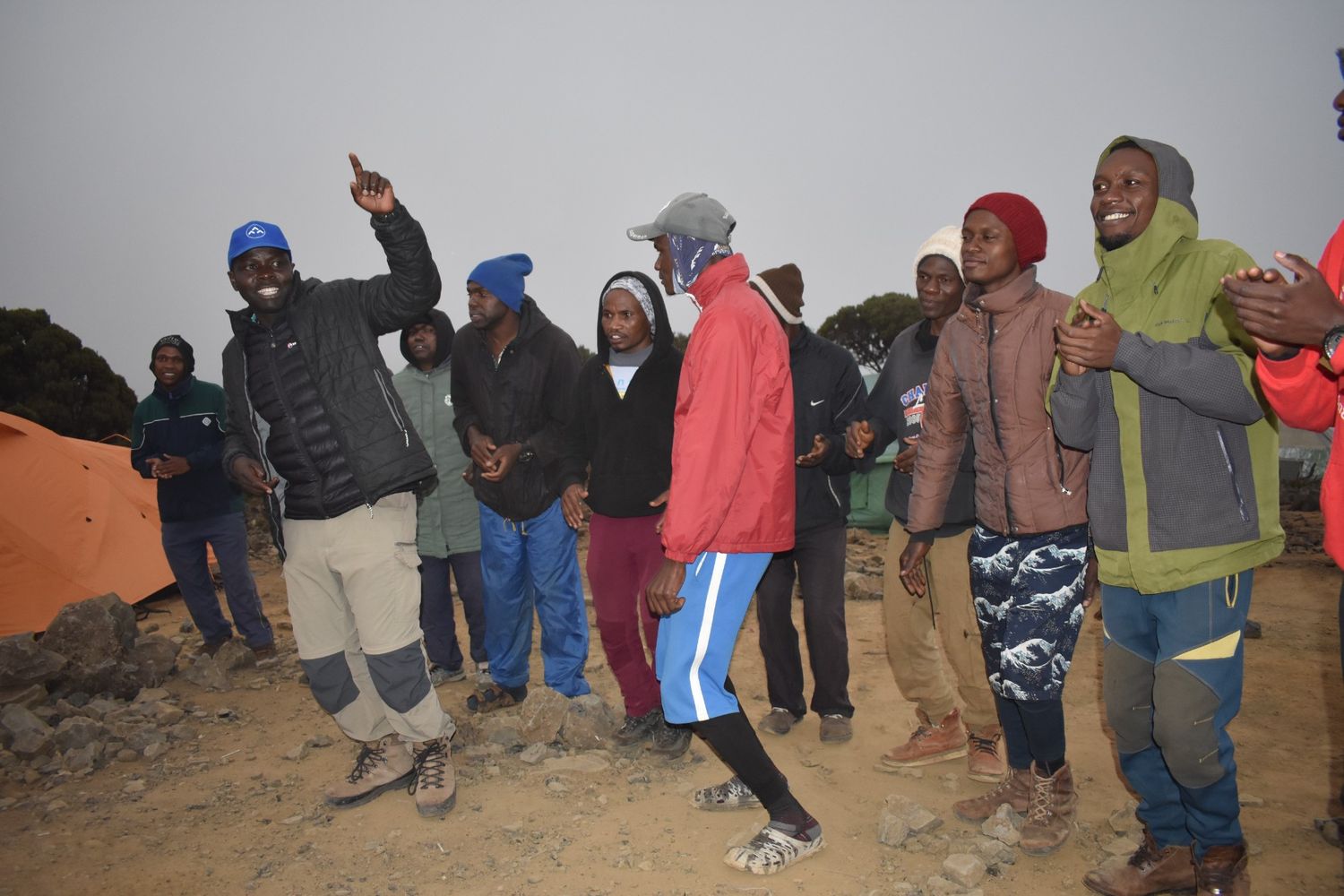
The support team giving a warm welcome to the mountain with song and dance.
What Your Kilimanjaro Travel Insurance Must Cover
If you’re looking for Kilimanjaro insurance, look for a policy with these 5 things:
1) High-altitude trekking to at least 6,000m
Kilimanjaro tops out at 5,895m, which is exactly why altitude limits matter so much.
A lot of standard travel insurance policies quietly cap hiking or trekking at around 3,000m unless you add an upgrade. And that’s the kind of fine print that only reveals itself when you’re already committed.
Even though the summit is technically 5,895m, I don’t like buying cover that stops exactly at the mountain’s maximum height.
Policies can be rigid about wording and thresholds, and I’d rather have a buffer than end up in a “well actually…” argument when it matters most. For that reason, I always look for 6,000m+ trekking cover for Kilimanjaro.
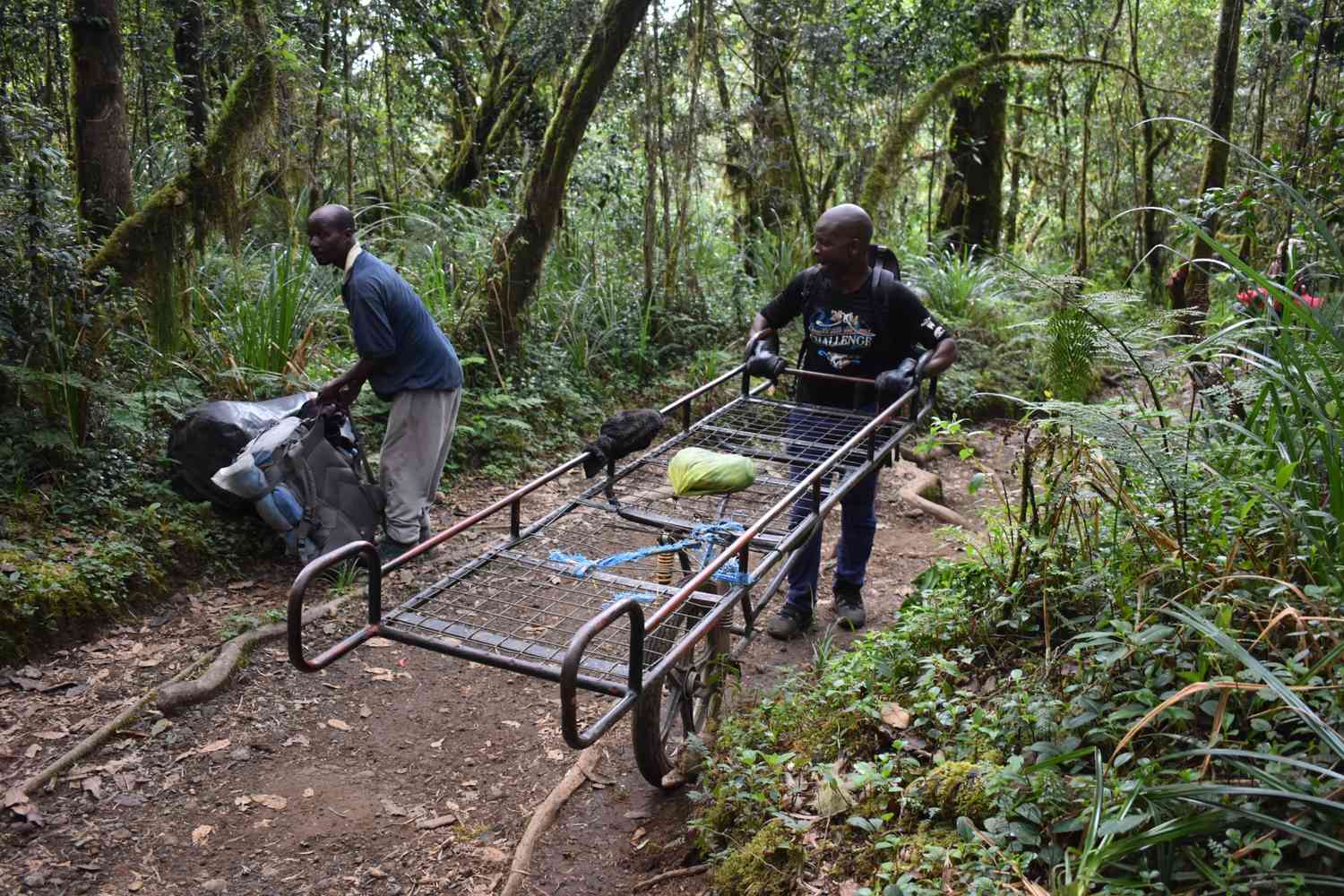
The fastest way to get someone who is injured or suffering from severe altitude sickness down the mountain is usually by these 'off-road' stretchers.
2) Emergency medical treatment
This is the boring bit, but it’s also the foundation.
If something goes wrong on a high-altitude trek, you want strong cover for hospital bills, treatment, medication, and the practical logistics of getting you the right care.
All of which can become complicated (and expensive) when you’re far from major medical facilities.
In my opinion, higher medical limits are worth it here. Remote problems often come with remote price tags, and Kilimanjaro is not the place to discover your policy is built for city breaks and beach holidays.
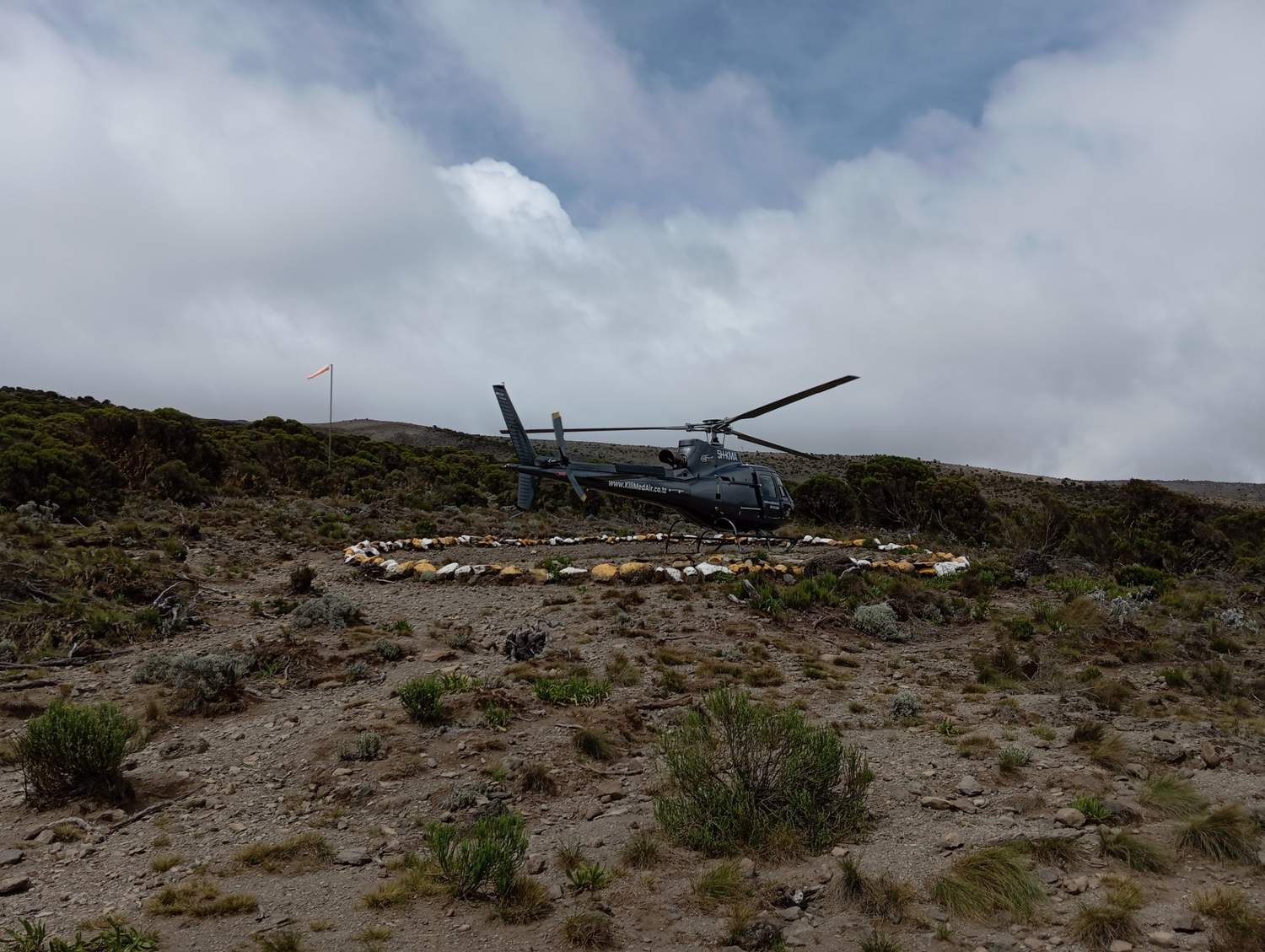
Helicopters evacuating trekkers off Kilimanjaro are a humbling reminder to take this mountain seriously (and get yourself insured!).
3) Emergency evacuation (and repatriation)
If there’s one benefit I pay the most attention to for Kilimanjaro, it’s evacuation.
Most rescues start with descent (supported walking, being assisted by your team, or stretcher carry), and in severe cases, you may need vehicle transfer or even air evacuation, depending on what’s available and medically appropriate.
It’s also worth noting that “evacuation” and “repatriation” are not always the same thing.
Evacuation usually means getting you to appropriate medical care, while repatriation is about getting you home afterwards. Ideally, your policy includes both, and makes the process clear.
My Pro Tip: Save your insurer’s emergency assistance number offline before the trek. Summit day is not the moment to discover your phone has no signal, no battery, and no respect for your plans.
4) Trip cancellation + curtailment
Cancellation and curtailment cover protects you financially when real life gets in the way.
Cancellation is what helps if you need to call off the trip before you travel (after paying deposits, flights, and trek costs).
Curtailment is what helps if you have to cut the trip short and come home early.
Because cancellation cover typically applies from the date you purchase the policy (terms apply), I buy my insurance as early as possible. Ideally as soon as I’ve paid anything non-refundable.
5) Baggage and gear (at least the essentials)
On a Kilimanjaro trek, your gear isn’t just “nice to have”, it’s safety and comfort.
If your bag goes missing and it contains your boots, warm layers, waterproofs, or the duffel your operator expects, you don’t want to be scrambling to replace essential kit in Moshi the day before your briefing.
If you’re bringing expensive camera gear or electronics, check the valuables limits too.
Many insurers will cover it, but sometimes only up to a sub-limit, and that’s a nasty surprise if you assume your full bag value is automatically protected.
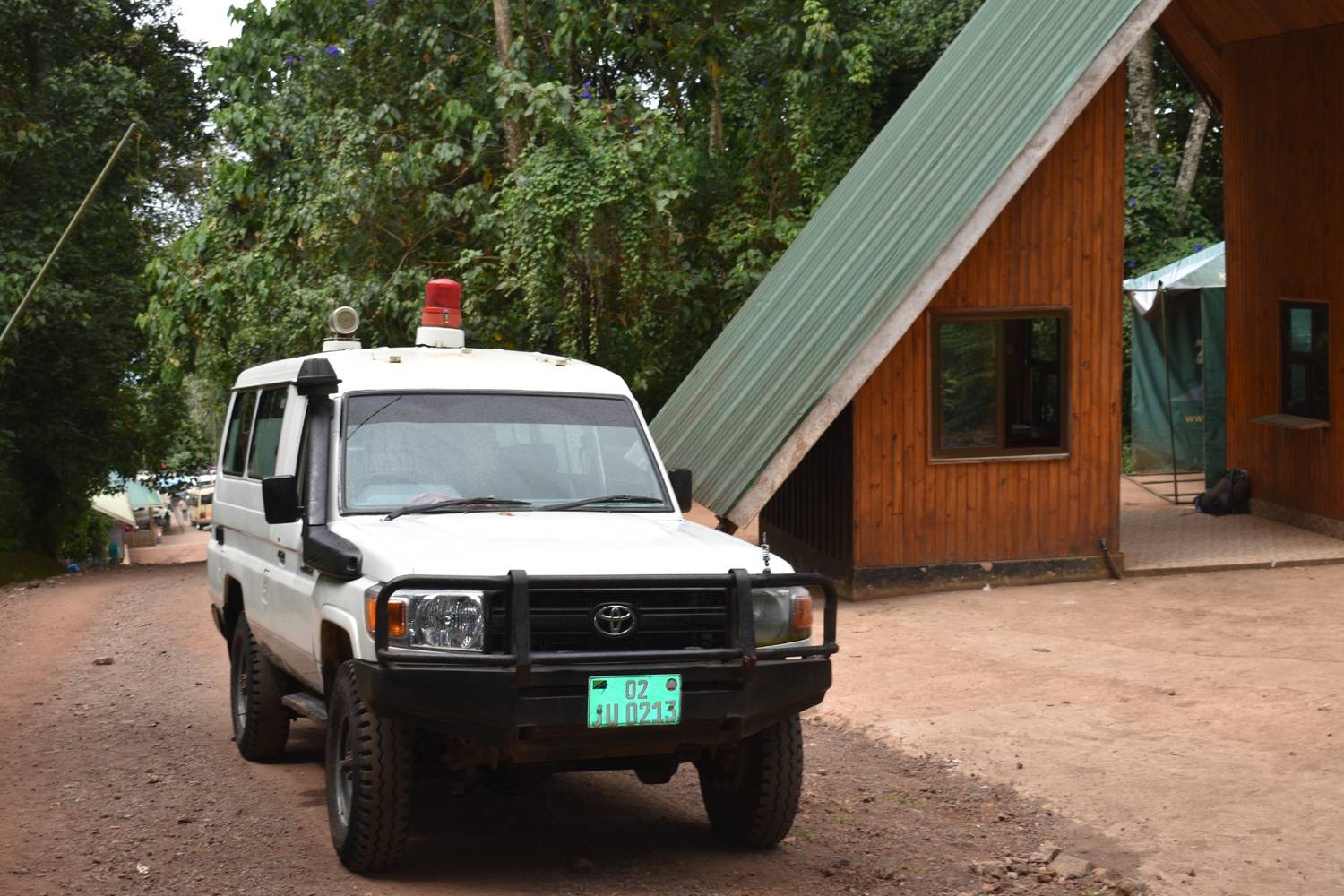
Ranger's vehicles stationed at the entrance gate have very limited access. They can only reach the very low reaches of the trails.
Kilimanjaro-Specific Pitfalls People Miss
“It’s just hiking” (until it isn’t)
Most Kilimanjaro routes are hiking paths, which is great news! It means many insurers will treat the climb as trekking rather than technical mountaineering.
The catch is when an itinerary includes anything more technical, even in short sections.
If there’s scrambling that feels “mountaineering-ish”, or any use of ropes in route variants, the insurer’s activity definitions suddenly matter a lot.
Even if your operator calls it trekking, that doesn’t automatically mean your insurer will agree, and when it comes to claims, your insurer’s wording is the one that counts.
Altitude sickness and pre-existing conditions
Altitude illness is one of the most common reasons people get pulled from Kilimanjaro.
That doesn’t mean you’ll get sick, but it does mean your insurance needs to be set up properly for high altitude in the first place. You want medical and evacuation benefits that are actually designed for this kind of trip.
If you have a pre-existing condition like diabetes, asthma, or a heart condition, you’ll usually need to declare it too. Insurers often expect disclosure, and not doing so can lead to exclusions or claim problems later.
(And yes, I’m painfully familiar with the “forms and fine print” life.)
Safari + Zanzibar combos
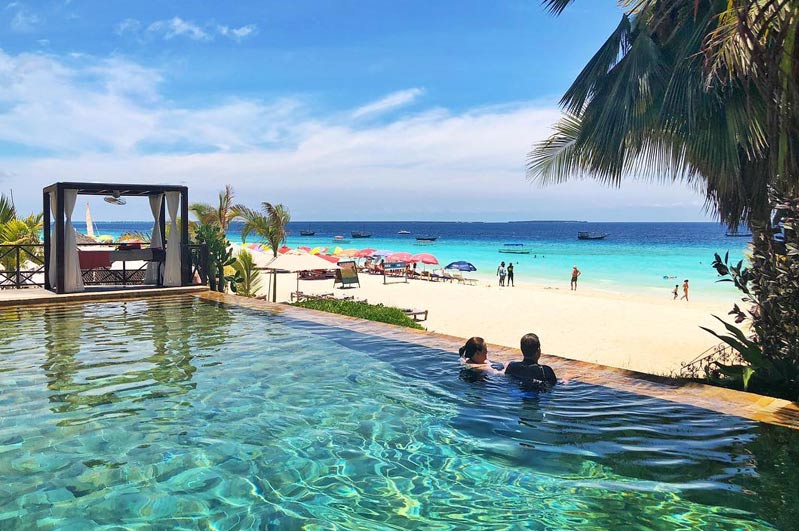
A lot of people combine Kilimanjaro with a safari, and plenty add Zanzibar afterwards as the “I survived summit night” reward.
The simplest approach is to get one coherent policy that covers your entire itinerary and planned activities, so you don’t end up with awkward gaps or mismatched exclusions.
It’s also worth being aware that Zanzibar has inbound insurance requirements, so if you’re heading there after the climb, make sure you understand what’s needed ahead of time rather than finding out at the airport.
How to Choose the Right Kilimanjaro Policy (Without Overthinking It)
Choosing Kilimanjaro travel insurance doesn’t have to feel like decoding ancient runes.
I keep it simple: you’re not trying to buy the fanciest policy in the world. You’re trying to buy the one that won’t fall apart the moment you mention 5,895m, altitude sickness, or evacuation.
Here’s the exact mental checklist I run through before I buy anything.
Start with the altitude (this is the dealbreaker)
Kilimanjaro’s summit is 5,895m, so I want trekking cover that goes to at least 6,000m. That little buffer matters, because insurers can be strict about thresholds and wording.
If a policy is vague about altitude, I treat that as a red flag. Vagueness is not your friend when you’re making a claim.
Then match the policy to your route (and your reality)
Most standard Kilimanjaro routes are hiking paths, which helps. But if your plan includes anything more technical (even a route variant that involves ropes or something an insurer might class as “mountaineering”) you need to confirm the activity classification properly.
Your operator’s description is useful, but the insurer’s definition is what counts.
If you want a simple rule: I choose a policy that clearly covers 6,000m+ trekking, includes strong medical and evacuation benefits, matches my route and itinerary, and I buy it early enough to protect my deposits.
Think beyond the mountain: safari, Zanzibar, and the rest of your itinerary
A lot of people climb Kili and then roll straight into a safari or Zanzibar. That’s brilliant, but make sure your policy covers the whole trip, not just the mountain section.
Activities like safari drives are usually straightforward, but you don’t want weird gaps in dates, locations, or planned activities.
And if Zanzibar is on the itinerary, it’s also worth being aware of inbound insurance requirements there, so you’re not blindsided later.
Be honest about your health (future-you will thank you)
If you’ve got a pre-existing condition (diabetes, asthma, heart conditions, anything like that), declare it properly.
I know it’s tedious. I know it’s paperwork. But it’s one of the easiest ways to avoid claim drama later, especially on an altitude-heavy trip.
Buy early, not “eventually”
This one’s boring but important: if you’ve paid deposits or booked flights, buy your insurance early so cancellation cover is actually useful.
The best policy in the world doesn’t help you if you only buy it the week before you fly.
What To Do If You Get Sick or Injured on Kilimanjaro
Nobody books Kilimanjaro expecting to need rescue or medical support, but the mountain doesn’t care about expectations.
Altitude can turn a “normal” problem into a serious one very quickly, and the smartest thing you can do is have a plan before you feel rough.
Here’s what I’d do (and what I’d want you to do) if something starts going wrong on the mountain.
1) Tell your guide early (don’t try to be heroic)
Your guide team has seen it all: headaches, nausea, dizziness, fatigue, breathing issues, stomach problems, weird cold injuries, you name it.
The earlier you speak up, the more options you have. Waiting until you’re properly unwell tends to turn a manageable situation into an urgent one.
On Kilimanjaro, the most common “rescue” is simply getting you down.
Descent is the first and best treatment for altitude issues, and the sooner you start it, the better your odds of stabilising quickly.
2) Follow the safety call, even if it hurts your pride
If your guides recommend descent or evacuation, it’s because they’re seeing warning signs.
Summit fever is real, but it’s also how people end up in serious trouble. If you’re told to go down, going down is the win.
3) Contact your insurer’s emergency assistance team as soon as practical
Your guides handle immediate safety decisions, but your insurer’s emergency assistance line is the key player if you need hospital care, evacuation, or anything that will turn into a claim.
Many insurers expect their assistance team to authorise major steps (especially expensive evacuation logistics), so it’s worth making that call as soon as you realistically can.
This is also why I always save the emergency number offline. Signal can be patchy, batteries can die in the cold, and you don’t want your plan to depend on a perfect phone moment.
4) Keep a simple record of what happened
You don’t need to write a novel, but it helps to keep basic notes:
- when symptoms started
- what your guide/medics observed
- what treatment you received
- where you were taken
- any paperwork you were given
If you’re not in a state to do this, ask a teammate or your guide to help. Claims go much smoother when the story is documented.
5) Focus on outcomes, not “making it to the top”
This is the bit nobody wants to hear in advance, but it matters: if you have to descend, that doesn’t mean you failed.
Kilimanjaro is an extreme environment, and leaving the mountain safely is always the correct objective.
My Pro Tip: Before your trek starts, take two minutes to save these in your phone (offline): your policy number, emergency assistance number, passport details, and your next-of-kin contact. It’s boring admin, but it’s also the kind of boring admin that saves you when things get real.
Next, let’s tackle some frequently asked questions about travel insurance for Kilimanjaro.
Kilimanjaro Travel Insurance FAQs
Here are the most frequently asked insurance questions we get on the blog:
The essentials
Q: Is Kilimanjaro travel insurance expensive?
A: It varies wildly by age, residency, and cover level. The trick is buying correct cover, not the cheapest cover.
Q: Do I need “high altitude trekking insurance” specifically?
A: Wording varies. What matters is that your policy explicitly covers trekking/hiking to 6,000m+ and includes evacuation.
Q: Is trekking to 6,000m enough for Kilimanjaro?
A: Yes, Kili is 5,895m. I still like a buffer.
Evacuation and rescue
Q: Does every policy include helicopter rescue?
A: No. And even when it’s included, it’s typically conditional: medically necessary + authorised.
Q: Can I choose helicopter rescue instead of descending?
A: No. Evacuation decisions are medical/logistical, not preference-based.
Q: What if I’m evacuated? Does insurance pay for everything?
A: It depends on the policy limits, exclusions, and whether you followed the procedure (including contacting the assistance team).
Medical and altitude sickness
Q: Does insurance cover altitude sickness?
A: Often yes, as a medical emergency, but it depends on the policy and whether you were covered for the activity/altitude in the first place.
Q: Will insurance cover me if I ignore my guide and push on?
A: Many policies exclude reckless behaviour. Follow your guide’s safety calls.
Route / activity classification
Q: Are Kilimanjaro routes “trekking” on most policies?
A: Often, yes, because most routes are hiking trails.
Q: What’s different about technical sections?
A: Anything involving ropes/technical climbing may change classification. Always check before you go.
Safari + Zanzibar combos
Q: If I do safari after Kili, do I need extra insurance?
A: Usually, you need one policy that covers your safari activities, too. See our article on safari travel insurance for Tanzania.
Q: Do I need separate insurance for Zanzibar?
A: Zanzibar has specific inbound insurance rules. Even if you have your own comprehensive policy, you may still need the local inbound scheme depending on entry requirements.
Buying timing and cancellation
Q: When should I buy Kilimanjaro travel insurance?
A: As soon as you pay deposits, that’s when cancellation risk starts.
Q: Can I buy insurance after I’ve started travelling?
A: Some providers offer “already travelling” cover, but it can be more restricted and isn’t always available.
Paperwork
Q: Do I need to carry proof of insurance on the mountain?
A: I always do. I keep a digital copy and a printed one (battery life and signal are unreliable on trek days).
My Final Thoughts
And there you have it: All you need to know about Kilimanjaro travel insurance.
Kilimanjaro is doable, magical, and honestly… a bit savage in the final push. The right insurance won’t make summit night easy, but it will stop a bad day becoming a financial crater.
If you want my simple rule: Get a policy that clearly covers high-altitude trekking to at least 6,000m, plus emergency medical and evacuation and buy it early.

My research says that Tanzania doesn't have yellow fever and that you only need that vaccination if you are first traveling through a YF country or if you have a layover of more than 12 hours in a YF country. This is contrary to your travel insurance page. What's correct?
If these criteria require you to have a vaccination to enter Tanzania, does that country accept the WHO determination that a vaccination is good for life or does it require that you have had a vaccination within 10 years of your visit?
Thanks
Hi Paul, your understanding is correct. You only need a YF vaccination if you are first traveling through a YF country or if you have a layover of more than 12 hours in a YF country.
Hi Mark, Im 67 Years of Age, fit and wanting Insurance to Climb Kilimanjaro.
Any Advice Please.
Thanks
Hi Keith, You might want to try Rise & Shield (they cover up to 65 years old). I think World Nomads only cover 60 years olds and younger.
Hello, could you recommend another insurance Company besides World Nomads? This company doesn’t cover Romanians. I had booked Kili for October. I hope you can help. Thanks
Hi Alexandru, you can try Rise & Shield. I believe they cover anywhere to anywhere: https://riseandshield.com/destinations/.
hi there. every source I look at for trekking advice to kili has the specific wording that “high altitude trekking insurance” is required to be able to summit killimanjaro. but when I look up travel insurance on different places, it is often called backpacking up to 6000 meters. is this just a wording difference? or do I need to specifically get something called high altitude trekking insurance? thank you
Hi Denver, yes, you do need high altitude trekking insurance. Most travel insurance providers don’t offer this, but some like Rise & Shield, have an adventure upgrade. I believe R&S call it ‘hiking up to 6,500m’ or ‘trekking up to 6,500m’ in their adventure extreme pack. If in doubt I recommend reaching out to your chosen insurer directly. All the best!